Investing in Pearl MS Rentals: Duplexes and Small Units
May 28, 2026
May 28, 2026
If you have been thinking about buying a rental property in Pearl, MS, small rentals and duplexes deserve a close look. Pearl offers a practical mix of steady renter demand, accessible housing stock, and strong regional connections that can appeal to local investors who want manageable properties instead of large apartment projects. In this guide, you will learn where the opportunity may be, what the local numbers suggest, and how to approach due diligence with more confidence. Let’s dive in.
Pearl is a smaller city in the Jackson metro, but it benefits from a location that keeps it connected to jobs, shopping, travel, and everyday services. The city sits near I-55, I-20, U.S. 80, and U.S. 49, with Jackson-Evers International Airport nearby. That kind of access can support demand from renters who want convenience and an easy commute.
The local population base also gives investors useful context. Pearl has 27,115 residents and 11,501 households, with 59.3% of homes owner-occupied. That tells you the market still leans heavily toward ownership, but there is a meaningful renter segment that supports smaller investment properties.
Pearl also has a broader economic footprint than some buyers expect. The city describes itself as a hub for retail, dining, hotels, manufacturing, higher education, and state offices. Within a 10-minute drive, the daytime population reaches 66,228, which helps explain why housing demand can remain active in and around the city.
For small investors, rent levels and vacancy matter more than headlines. In Pearl, the numbers point to a market that looks steady rather than overheated. That can be appealing if your goal is long-term cash flow and manageable risk.
QuickFacts puts Pearl’s median gross rent at $1,152. In ZIP code 39208, median gross rent rose from $788 in 2011 to $1,183 in 2024, showing a long-term upward trend even if individual properties vary by age, location, and condition.
The current rent mix in 39208 is also helpful for setting expectations. About 45.72% of rents fall in the $1,000 to $1,499 range, and 19.18% fall in the $1,500 to $1,999 range. Another 25.61% fall in the $500 to $999 range, which suggests there is still room for a range of product types and price points.
Vacancy has stayed in the mid-single digits instead of signaling chronic oversupply. Pearl’s comprehensive plan reported a 5.8% housing vacancy rate in the 2010 Census and 4.5% in the 2017 ACS estimate. The 2020 to 2024 ZIP 39208 profile shows a 6.23% overall vacancy rate, which still points to a relatively balanced market.
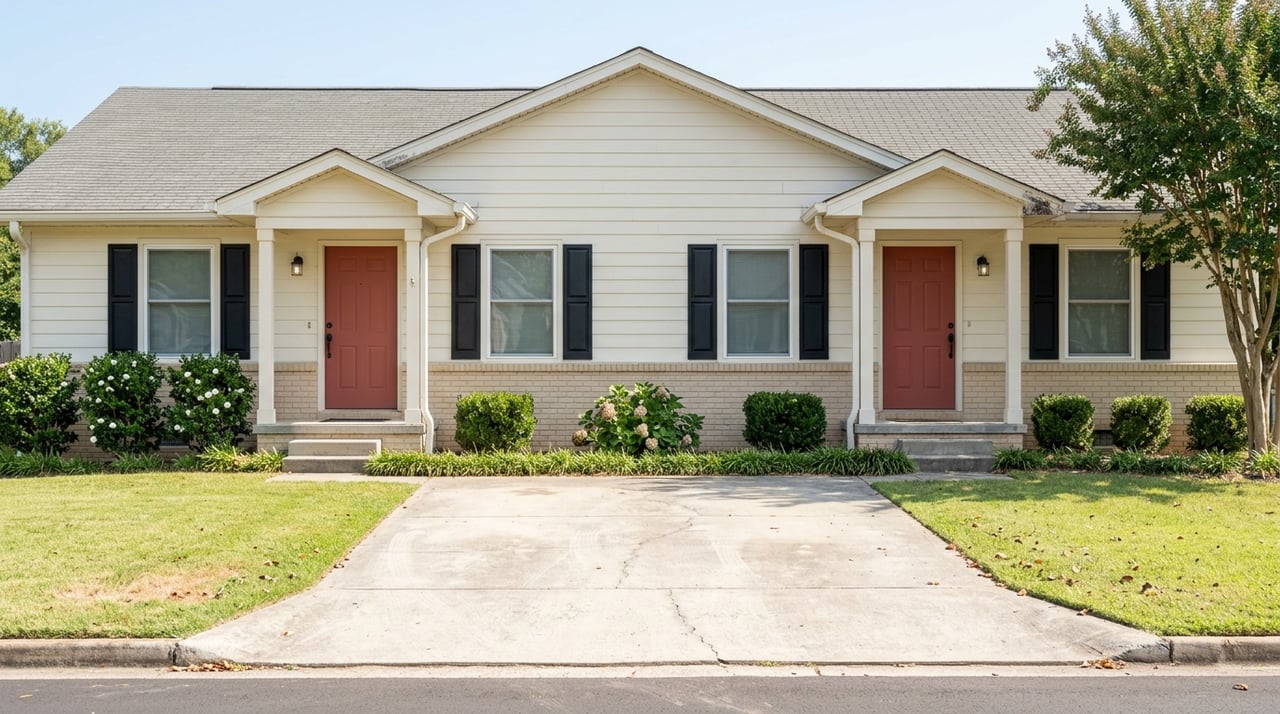
Pearl is not dominated by large apartment inventory. The housing base in ZIP 39208 is 71.00% single-family, 16.81% multi-family, and 12.19% other unit types. That mix matters because it suggests small rentals and duplex-style properties may fill a useful middle ground between single-family homes and larger multifamily projects.
The city’s comprehensive plan gives more support to that idea. From February 2016 through September 2019, Pearl issued 125 new single-family residential permits and permits for 12 fourplex buildings totaling 48 units. That is not a huge volume, but it does show that small multifamily exists as a real part of the local market.
For many investors, this creates a practical opportunity. A duplex or small infill rental can offer multiple income streams without the complexity of a larger apartment property. In a market where single-family housing remains dominant, small multifamily can also be limited enough to require careful comp analysis and property-by-property review.
Pearl’s housing stock is older, but the overall picture appears workable. The comprehensive plan says 85% of housing units were built between 1960 and 2009. For investors, that usually means you should expect updates, repairs, and maintenance planning, but not necessarily severe redevelopment conditions.
The same plan says the city’s housing stock is generally well maintained. In the CMPDD land-use survey, only 21 homes were considered dilapidated. That suggests many properties may offer solid investment potential with moderate rehab or value-add improvements instead of full-scale reconstruction.
This can be a good fit if you want a property where cosmetic updates, systems review, and careful budgeting may improve returns. It also means inspection quality becomes especially important before you commit to a purchase. Older properties can work well, but only when you understand the true condition and likely near-term expenses.
In Pearl, location still shapes the numbers. The city identifies several major arterials and collectors, including I-20, U.S. 49, U.S. 80, MS 475, Old Brandon Road, Greenfield Road, and Riverwind Drive. Commercial activity around these corridors can support rental demand by keeping tenants close to shopping, services, and transportation routes.
The Riverwind Shopping District is one of the clearest examples. The city places it just off I-20 near major retail, restaurants, hotels, and airport access. For investors, that makes corridor-adjacent properties worth a closer look, especially if your strategy focuses on convenience-driven rental demand.
By contrast, properties deeper inside residential areas may behave more like traditional starter-home rentals. That is not a negative. It simply means your tenant profile, rent ceiling, and renovation strategy may differ from what works closer to major commercial nodes.
In a market like Pearl, due diligence is where good decisions get made. Because the small multifamily inventory is real but limited, every duplex or small rental deserves close review before you rely on rent projections or sales comparisons.
Your first stop should be Pearl’s Community Development Department. The city says this office handles planning, land development, building construction, and code compliance. Its public resources include zoning information, the Official Development Ordinance, the Pearl Comprehensive Plan, building permits, rental inspections, rental registration, rezoning, change-of-occupancy information, conditional use materials, and the city map viewer.
That matters because an investor should confirm more than bedroom count and advertised rent. You should verify whether the property is a legal duplex or fourplex, whether rental registration applies, and whether a change of occupancy issue could affect your plans. A property that looks like a straightforward income opportunity can become far less attractive if the legal use is unclear.
Next, review Rankin County public records. The county Tax Assessor maintains property tax maps, assessment rolls, GIS map viewer access, and property record search tools. The Chancery Clerk’s Land Records division also provides access to deeds, deeds of trust, plats, and certain UCC liens through the county’s official records system.
These records can help you confirm ownership history, parcel boundaries, tax details, and potential title concerns. They are especially useful when you are comparing small infill properties where lot configuration, recorded documents, or prior financing issues may affect value. Public records will not replace professional advice, but they can help you ask better questions early.
If you are evaluating small rentals and duplexes in Pearl, these local figures provide a strong starting point:
These figures do not underwrite a deal by themselves, but they do help frame what kind of market you are entering. Pearl looks more like a steady, practical add-on market than a place built around high-density multifamily investing.
If you want to invest in Pearl, small rentals and duplexes may offer a balanced path into the market. Rents are centered around the low-$1,100s, vacancy has remained in the mid-single digits, and the housing stock appears usable for buyers who are comfortable with older homes and moderate updates. That is a combination many local and regional investors can work with.
The best opportunities will likely depend on your goals. If you want simplicity, a starter single-family rental in an established area may fit. If you want multiple income streams from one property, a legal duplex or other small multifamily asset near major corridors may be worth targeting.
Either way, success in Pearl is likely to come from local knowledge and careful verification. This is the kind of market where zoning, legal use, permit history, and realistic rent comps can shape your result more than broad national trends. A thoughtful, neighborhood-level approach can make a major difference.
If you are weighing an investment purchase in Pearl or comparing small rentals with duplex opportunities, working with a local brokerage can help you sort through inventory, public records, and market context with less guesswork. Connect with Marketplace Real Estate for practical guidance on finding the right property in Pearl and the surrounding central Mississippi market.
Stay up to date on the latest real estate trends.
We pride ourselves in providing personalized solutions that bring our clients closer to their dream properties and enhance their long-term wealth. Contact us today to find out how we can be of assistance to you!